Best Cycladic-Style Stays in Pachaina Milos
Pachaina's one hotel, Asterias Boutique Hotel, carries the whitewashed, Cycladic look through a quieter corner of Milos than either Adamas or Pollonia, its self-catering complex 200 metres from Pachaina Beach built in the same lime-rendered, low-boxy style found across the island. The architecture here reads as consistent with Milos's broader Cycladic character rather than a resort-specific styling choice, sea and mountain-facing rooms both finished in the same whitewashed vocabulary. For travellers wanting the classic look within a village genuinely removed from the busier tourist circuit, Pachaina offers a distinctly quiet version of the aesthetic.
Style cycladique · Pachaina en chiffres
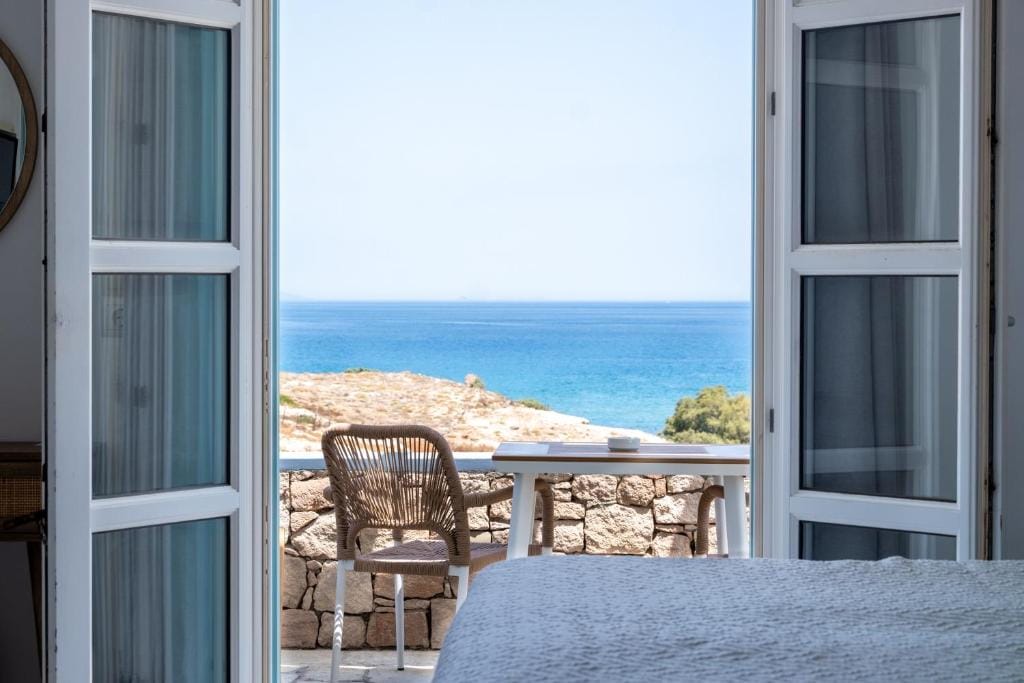
The Whitewashed Look, Away From The Crowds
Asterias Boutique Hotel carries the whitewashed, Cycladic style throughout its self-catering complex, thick lime-rendered walls and simple, low silhouettes that echo the architecture found across Milos more broadly, from Adamas's harbour front to Plaka's clifftop chora further along the island. The 200-metre distance to Pachaina Beach keeps the property connected to the water without the crowds that come with a more central Adamas or Pollonia address, giving the Cycladic look here a quieter, more contemplative setting than elsewhere on the island. The result is a version of Milos's signature look that feels genuinely calm rather than curated for constant foot traffic, since Pachaina simply doesn't see the volume of daily visitors that passes through Adamas's harbour front each morning.
Rooms split between sea and mountain-facing categories, both finished in the same core materials, white render and simple wooden accents, though the outlook differs meaningfully between the two. Guests who prioritise the architecture and the view together tend to request the sea-facing rooms specifically, while those less concerned with a water view often find the mountain-facing category just as comfortable at a typically lower nightly rate within the same small complex. Photographers in particular tend to appreciate the sea-facing rooms here, since the whitewashed walls catch the coastal light differently than the mountain-facing side, especially during the early morning and late afternoon hours favoured for capturing the architecture at its best.
The self-catering format adds a practical dimension to the Cycladic stay here, kitchens built into a style of architecture traditionally designed around simple, functional living rather than tourist-facing luxury. This gives Pachaina's version of the aesthetic a more genuine, lived-in feel than some of the newer constructions built specifically for visitors in Adamas, even though the property itself was clearly built with guests rather than fishing families in mind from the outset. This practical, working version of Cycladic design suits travellers who want to experience the architecture as something more than a backdrop, actually using the kitchen and living space the way island buildings were traditionally designed to be used by residents.
Travellers comparing Pachaina against Plaka for the most concentrated version of Milos's Cycladic architecture should note the trade: Plaka delivers the style at its most dramatic, clifftop and chora-scale, while Pachaina offers a smaller, quieter interpretation within a self-catering complex removed from both crowds and the island's more touristic circuit, a genuinely different but equally authentic expression of the same architectural tradition. Both approaches reward the traveller who seeks them out specifically, and neither should be treated as a lesser version of the other, simply a different scale and pace of the same underlying architectural tradition found consistently across the island.